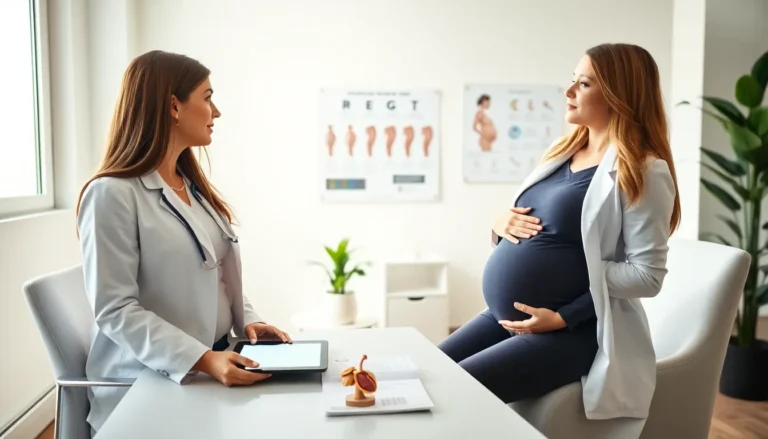
Learning how to get pregnant involves understanding a few key biological processes and making smart lifestyle choices. For many couples, conception happens within a few months of trying. Others need more time, guidance, or medical support. This guide breaks down the essential steps, from tracking ovulation to knowing when it’s time to see a specialist. Whether someone is just starting their journey or has been trying for a while, these practical strategies can help increase the chances of a successful pregnancy.
Table of Contents
ToggleKey Takeaways
- Understanding how to get pregnant starts with knowing your fertile window—the six-day period around ovulation when conception is most likely.
- Track ovulation using methods like ovulation predictor kits (OPKs), basal body temperature charting, and cervical mucus monitoring for best accuracy.
- Lifestyle factors like maintaining a healthy weight, eating a balanced diet, quitting smoking, and taking prenatal vitamins significantly boost fertility.
- Have intercourse every one to two days during the fertile window to maximize your chances of conception.
- Seek professional help if you’re under 35 and haven’t conceived after one year, or after six months if you’re 35 or older.
- Early evaluation by a fertility specialist can provide clarity and prevent delays, especially since egg quality declines with age.
Understanding Your Fertility Cycle
The menstrual cycle plays a central role in how to get pregnant. A typical cycle lasts about 28 days, though anywhere from 21 to 35 days is considered normal. The cycle has four phases: menstruation, the follicular phase, ovulation, and the luteal phase.
During menstruation, the uterus sheds its lining. The follicular phase follows, during which hormones signal the ovaries to prepare an egg. Ovulation occurs around day 14 in a 28-day cycle, this is when the ovary releases a mature egg into the fallopian tube. The egg survives for about 12 to 24 hours after release.
Sperm, on the other hand, can live inside a woman’s body for up to five days. This creates a “fertile window” of roughly six days each cycle. Couples trying to conceive should focus intercourse during this window for the best results.
Understanding these phases helps people time their efforts more effectively. Knowing when ovulation happens is the single most important factor in how to get pregnant quickly.
Tracking Ovulation Effectively
Pinpointing ovulation is essential for anyone learning how to get pregnant. Several methods exist, and combining them often yields the best accuracy.
Ovulation Predictor Kits (OPKs)
These over-the-counter tests detect the luteinizing hormone (LH) surge that occurs 24 to 36 hours before ovulation. A positive result signals that ovulation is approaching. Couples should have intercourse within a day or two of a positive test.
Basal Body Temperature (BBT) Charting
Basal body temperature rises slightly, about 0.5 to 1 degree Fahrenheit, after ovulation. By taking temperature each morning before getting out of bed, a person can identify patterns over several cycles. The catch? BBT confirms ovulation after it happens, so it’s more useful for predicting future cycles than the current one.
Cervical Mucus Monitoring
As ovulation approaches, cervical mucus becomes clear, slippery, and stretchy, similar to raw egg whites. This “fertile quality” mucus helps sperm travel toward the egg. Checking mucus daily provides real-time clues about fertility.
Fertility Apps
Many apps combine calendar tracking, BBT data, and symptom logging to predict ovulation. While convenient, they work best when paired with other methods rather than used alone.
Consistency matters. The more data collected over multiple cycles, the clearer the ovulation pattern becomes. Most experts recommend having intercourse every one to two days during the fertile window to maximize chances of conception.
Lifestyle Factors That Boost Fertility
Beyond timing, lifestyle choices significantly impact how to get pregnant. Both partners can take steps to improve their reproductive health.
Maintain a Healthy Weight
Being underweight or overweight affects hormone levels and ovulation. Studies show that women with a body mass index (BMI) between 18.5 and 24.9 typically have more regular cycles. Men with obesity may experience lower sperm quality.
Eat a Balanced Diet
Foods rich in folic acid, iron, and antioxidants support fertility. Leafy greens, whole grains, lean proteins, and healthy fats provide essential nutrients. The “fertility diet”, based on research from Harvard, emphasizes plant proteins, full-fat dairy, and complex carbohydrates.
Limit Alcohol and Caffeine
Heavy drinking reduces fertility in both men and women. Most doctors recommend limiting caffeine to 200 milligrams daily (about one 12-ounce cup of coffee) while trying to conceive.
Quit Smoking
Smoking damages eggs and sperm. It also increases the risk of miscarriage. Quitting improves fertility within months.
Manage Stress
Chronic stress can interfere with ovulation. Exercise, meditation, and adequate sleep help keep stress hormones in check. That said, mild stress doesn’t typically prevent pregnancy, so there’s no need to add “stress about stress” to the list.
Take Prenatal Vitamins
Starting a prenatal vitamin with at least 400 micrograms of folic acid before conception reduces the risk of neural tube defects. Many healthcare providers recommend beginning these supplements three months before trying to conceive.
When to Seek Professional Help
Sometimes, even though doing everything right, pregnancy doesn’t happen as expected. Knowing when to consult a fertility specialist can save valuable time.
General guidelines suggest seeking help if:
- A woman under 35 hasn’t conceived after one year of regular, unprotected intercourse
- A woman 35 or older hasn’t conceived after six months of trying
- A woman over 40 should consider evaluation before starting to try
Certain conditions warrant earlier consultation. These include irregular or absent periods, a history of pelvic inflammatory disease, endometriosis, prior cancer treatment, or multiple miscarriages. Men with known fertility issues, such as low sperm count or erectile dysfunction, should also seek evaluation sooner.
A reproductive endocrinologist can run tests to identify potential problems. Common assessments include hormone blood tests, ultrasounds, semen analysis, and hysterosalpingography (HSG) to check if fallopian tubes are open.
Treatment options range from medications that stimulate ovulation to intrauterine insemination (IUI) or in vitro fertilization (IVF). Many couples find success with relatively simple interventions. Others require more advanced procedures. Either way, getting professional input provides clarity and direction.
Waiting too long to seek help can reduce options, especially for women, since egg quality declines with age. Early evaluation offers peace of mind and a clear path forward.